Taekwondo
History
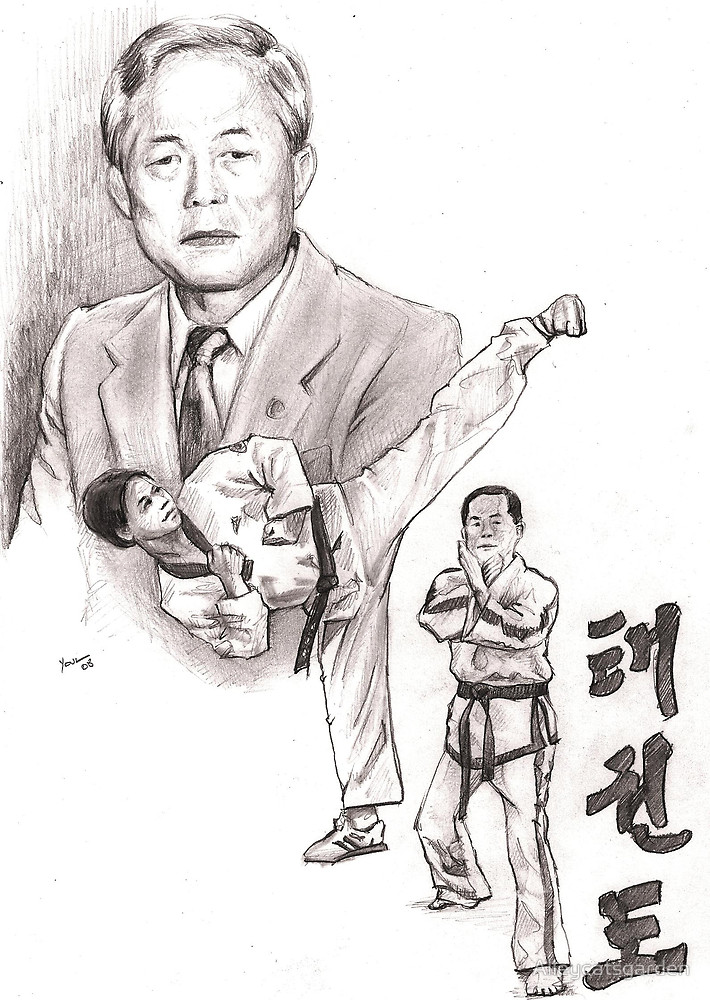
Taekwondo is a Korean martial art created on 11 April 1955 by General Choi Hong Hi of the South Korean army. Over the years of its existence Taekwondo has gained great popularity, and today the number of people practising this martial art runs into the millions.
In Korean:
Tae – a kick
Kwon – a fist or a strike with the hand
Do – the way
Thus Taekwondo has two components: Taekwon is the use of the hands and feet for self-defence. Do is a way of life that includes intensive mental training for developing the highest awareness. Understanding the culture and philosophy of Taekwondo is the quinta essentia of the philosophical wisdom of the East.
Taekwondo was created for soldiers, and this greatly influenced the martial art. The training process is characterised by strict discipline, and the rules of conduct in the hall are strictly regulated. Special attention is paid to clothing, rituals, and the attitude towards the teacher and fellow practitioners.
Because the first Taekwondo students were soldiers, Taekwondo had to meet the following requirements:
- The training process had to be as rational as possible so that the maximum number of students could be trained in a short time (conscripts have no time for long years of training);
- A sound methodology had to make Taekwondo easy for every soldier to learn, even without natural aptitude;
- The teaching had to suit both soldiers with no knowledge of martial arts and experienced masters with high knowledge and skills in other combat sports;
- The teaching had to have minimal requirements for the training room and equipment;
- The teaching had to be effective in hand-to-hand combat on the battlefield.
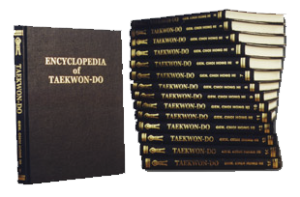
Taekwondo is the only martial art whose teaching methodology is described by its founder. The Taekwondo Encyclopedia, which consists of 15 volumes, contains all the components of Taekwondo: philosophy, the order of obtaining belts, technique, terminology and so on. Of course, the encyclopedia cannot replace an instructor, but it helps to avoid distortion of the classical technique and gives everyone the chance to correct and improve their skills, avoiding mistakes and oversimplifications. With the help of the encyclopedia the art of Taekwondo becomes accessible to everyone, the possibility of speculating about the secrecy of the system disappears, and no one can hide their ignorance behind a pretext of secrecy.
The well-developed teaching methodology of Taekwondo can today be adapted to different ages, for men and women alike. From the point of view of biomechanics the technique is very rational and makes it possible to generate maximum power.
In Taekwondo everyone can get what they need: improve their health, learn self-defence, become acquainted with the philosophy of Taekwondo, build a strong body and spirit. But to become a Master takes great dedication, exhausting training and unwavering determination.
The philosophy of Taekwondo
Because Taekwondo is a Korean martial art, its philosophy is closely connected with the Korean mentality. Korea is a country that, throughout its history, has never gone to war with its neighbours in order to seize their territory. Therefore Taekwondo may likewise be used only for self-defence or for the defence of one’s loved ones.
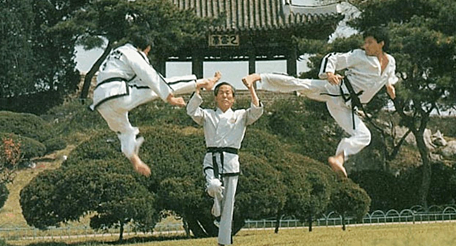
The philosophy of Taekwondo is built on ethical and spiritual principles such as courtesy, perseverance, indomitable spirit, self-control and integrity.
The main aim of Taekwondo is to promote, through the power of humanity, justice, wisdom, spirituality and trust, the creation of a better society in which peace and harmony prevail.
No person or group of people should use Taekwondo to achieve selfish, aggressive or cruel aims. Taekwondo must not be used for commercial or political purposes either.